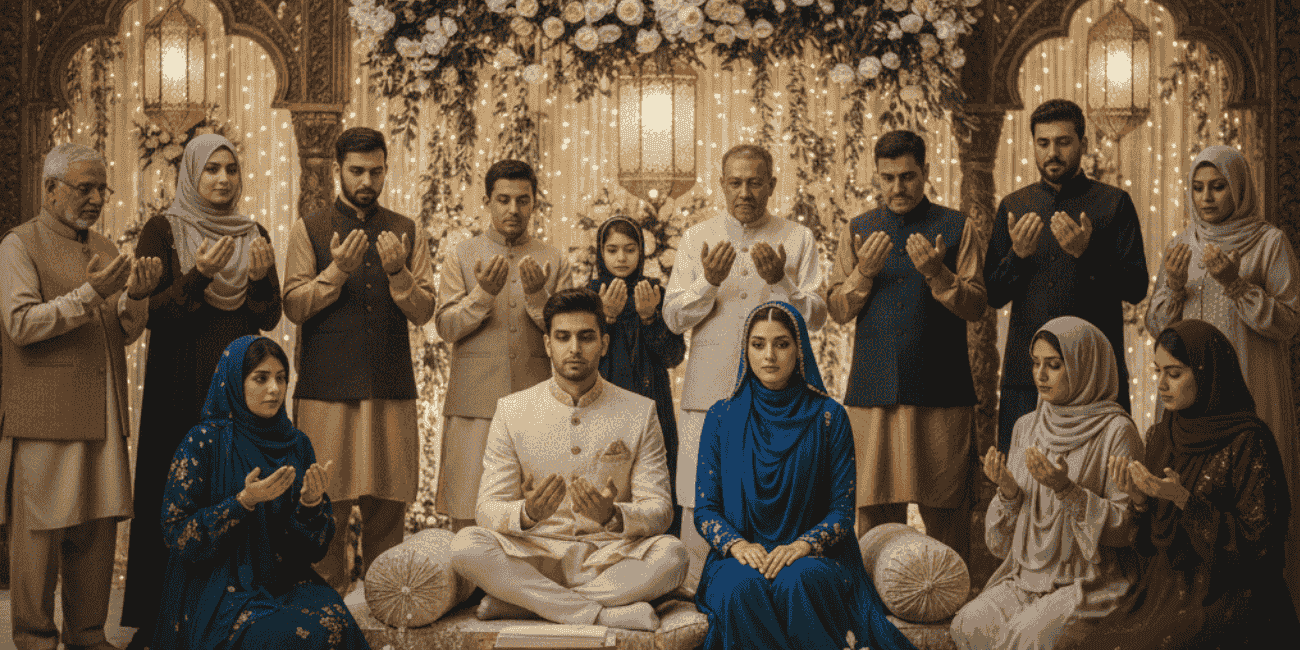
Nikah in Islam – A Bond of Faith and Love
Understanding the Concept of Nikah in Islam
Nikah in Islam is far more than a social or legal contract; it is a sacred covenant that binds two souls under the guidance of Allah (SWT). Rooted in faith, Nikah represents love, compassion, and mutual respect, forming the cornerstone of a peaceful and balanced society.
The Arabic term Nikah literally means “union” or “joining together.” In Islamic law, it refers to the lawful and formal union between a man and a woman, established through mutual consent, witnessed agreement, and the presence of a Mahr (dowry). This relationship is not merely a worldly arrangement but a spiritual alliance aimed at fulfilling half of one’s faith, as emphasized in several authentic Hadiths.
The Prophet Muhammad (ﷺ) beautifully stated:
“When a man marries, he has completed half of his faith; so let him fear Allah regarding the remaining half.” (Tirmidhi)
This hadith reflects the depth of Nikah as both a moral safeguard and a spiritual partnership, protecting believers from sin while cultivating love, mercy, and faith.
The Divine Foundation of Marriage in the Quran and Sunnah
Marriage in Islam is divinely ordained, and its foundation rests upon the words of Allah in the Holy Quran. In Surah Ar-Rum (30:21), Allah (SWT) declares:
“And among His signs is that He created for you mates from among yourselves so that you may find tranquility in them; and He placed between you affection and mercy. Indeed, in that are signs for people who reflect.”
This verse encapsulates the emotional, physical, and spiritual dimensions of marriage. The Quran and Sunnah collectively describe Nikah as a source of comfort (Sakinah), love (Mawaddah), and mercy (Rahmah). These three elements form the pillars of a successful and blessed marriage.
Furthermore, marriage serves as a shield from immorality. The Prophet (ﷺ) encouraged young believers to marry if they have the means, stating that it helps preserve chastity and guard the eyes from temptation.
Nikah as an Act of Worship and Obedience
Every step of Nikah—from the proposal to the ceremony—is an act of obedience to Allah. When done with sincere intentions, it becomes a form of ‘Ibadah (worship). The mutual rights, responsibilities, and kindness exchanged within the marriage all contribute to a believer’s spiritual growth.
Through Nikah, one not only fulfills natural desires in a lawful way but also contributes to the moral fabric of society. It’s a means of attaining Allah’s pleasure and a path toward emotional serenity. Couples who build their relationship upon the principles of Taqwa (God-consciousness) enjoy not just worldly happiness but eternal rewards.
The Spiritual Purpose of Marriage in Islam
Marriage is more than companionship—it’s a journey of faith. It nurtures the heart, disciplines the soul, and strengthens the believers’ bond with their Creator. Through Nikah, Islam emphasizes harmony, forgiveness, and gratitude.
A husband and wife who pray together, support one another in acts of goodness, and maintain humility embody the Quranic description of “garments for each other” (Surah Al-Baqarah 2:187)—symbolizing closeness, comfort, and protection.
Conditions
and Essentials of a Valid Nikah
Islamic marriage is built upon clarity,
consent, and justice. Unlike cultural customs that may complicate the
process, the Shariah framework of Nikah ensures fairness and equality
for both partners. Every Nikah must fulfill specific conditions to be valid
and blessed in the eyes of Allah (SWT).
Consent
and Mutual Agreement
In Islam, mutual consent is
the foundation of marriage. Both the bride and groom must willingly agree to
the union without any form of coercion or pressure. The Prophet Muhammad (ﷺ) said:
“A woman who has been previously
married has more right to her person than her guardian, and a virgin’s consent
must be sought, and her silence indicates her consent.” (Bukhari &
Muslim)
This hadith clearly affirms that forced marriages are un-Islamic. Islam gives women the full right to accept or reject a proposal. A marriage conducted without the free will of both parties is invalid in the eyes of Shariah.
The
Role of Wali and Witnesses
Every Nikah must have a Wali
(guardian) and two witnesses to ensure transparency and protection
for the bride. The Wali, usually the bride’s father or guardian, safeguards her
rights and ensures that the marriage aligns with Islamic ethics. The Prophet (ﷺ) said:
“There is no Nikah without a Wali.” (Abu
Dawood, Tirmidhi)
Witnesses serve to authenticate the
union, preventing disputes or secret marriages. This practice emphasizes the
public and honorable nature of Islamic marriage.
Mahr
– The Symbol of Respect and Responsibility
Mahr is a mandatory gift from the groom to the bride,
symbolizing love, commitment, and responsibility. It is not a “bride price,”
but a sign of honor and respect. Allah (SWT) says in Surah An-Nisa (4:4):
“And give the women [upon marriage]
their due compensation graciously.”
Mahr can be monetary, material, or symbolic—depending on the mutual agreement. It serves as a form of financial security and a token of sincerity from the husband.
Rights
and Responsibilities in Islamic Marriage
In Islam, Nikah is not merely about
love—it’s about justice, partnership, and accountability. Both spouses
are equal before Allah, though their roles and responsibilities differ.
The
Husband’s Responsibilities According to Islam
A husband’s duties go beyond
financial provision. He is entrusted with leadership through compassion,
not control. Islam instructs husbands to treat their wives with mercy and
respect. The Prophet (ﷺ) said:
“The best among you are those who
are best to their wives.” (Tirmidhi)
His main obligations include:
- Providing financial support (Nafaqah)
- Protecting his wife and home
- Treating his spouse with fairness and kindness
- Involving her in family decisions
- Maintaining patience and forgiveness
A righteous husband views his wife
as a trust from Allah, not as property, but as a partner in faith.
The
Wife’s Role and Rights in Marriage
Islam honors women with spiritual
equality and personal dignity. A wife’s role is that of a companion,
counselor, and nurturer of love and peace in the household. She is entitled to:
- Respect, emotional care, and protection
- Financial security (Mahr and maintenance)
- The right to own property and make independent
decisions
- Fair treatment and spiritual companionship
The Quran states, “And they
(women) have rights similar to those (of men) over them in kindness.” (Al-Baqarah
2:228)
This divine principle establishes mutual respect and balance within
marriage.
Nikah
as a Social Institution in Islam
Islam views Nikah not just as a
personal affair but as a foundation for a healthy society. A family
based on faith and moral values contributes to a stable and ethical community.
Building
a Righteous Family and Ummah
Through marriage, believers
cultivate generations of righteous individuals. Parents become role models
of piety, trust, and cooperation, thereby strengthening the Ummah (Muslim
community). Prophet Muhammad (ﷺ) said:
“Marry the loving and fertile, for
through you, I will compete with the nations for superiority in numbers.” (Abu
Dawood)
Thus, Nikah is an act of social
responsibility—ensuring the continuation of a moral and spiritually guided
generation.
Avoiding
Extramarital Relationships – The Protective Aspect of Nikah
Nikah protects believers from
immorality and social corruption. Islam prohibits all forms of illicit
relationships, promoting lawful companionship instead. This ensures emotional
stability, purity, and community harmony.
The
Role of Zaujain.pk in Facilitating Halal Marriages
In today’s digital age, Zaujain.pk
stands as a bridge between tradition and technology—helping Muslims find
partners based on faith, values, and compatibility.
Upholding
Islamic Values in Modern Matchmaking
Zaujain.pk emphasizes Halal
matchmaking, where users connect with potential spouses through verified,
respectful, and Shariah-compliant interactions. Profiles highlight religious
commitment, education, and family values, ensuring that faith
remains the foundation of every match.
Encouraging
Serious, Faith-Oriented Matches
Unlike casual dating platforms,
Zaujain.pk encourages serious, marriage-focused relationships. It
promotes an environment of sincerity, modesty, and respect—reflecting the
essence of Nikah as an act of faith and love.
By combining modern tools with Islamic principles, Zaujain.pk empowers Muslim singles to fulfill their Sunnah while staying true to their religious and cultural identity.
Common
Misconceptions About Nikah in Islam
Despite its beauty and depth, Nikah
is often misunderstood due to cultural misinterpretations and media
stereotypes.
The
Myth of Forced Marriage
Forced marriages are not Islamic.
Consent is mandatory for both men and women. Islam upholds personal choice
within the framework of faith and family guidance. Any marriage performed under
pressure contradicts the Quranic spirit of justice and love.
The
Role of Love Before and After Nikah
Islam neither forbids love nor
encourages recklessness. Love before marriage should be guided by modesty
and intention, leading to Nikah—not sin. After marriage, Islam encourages
expressions of affection. Prophet Muhammad (ﷺ) openly showed love to his wives and
encouraged companionship, humor, and mutual respect.
Strengthening
Love and Faith After Nikah
Marriage doesn’t end with the Nikah
ceremony—it begins there. A successful Islamic marriage requires effort,
patience, and spirituality.
Praying
Together and Seeking Barakah
Couples who pray together grow
together. Performing Salah, reciting Quran, and making Dua as a couple
brings immense blessings (Barakah). It strengthens the bond between
spouses and keeps their relationship anchored in faith.
Effective
Communication and Emotional Bonding
Islam teaches kindness in speech and forgiveness in conflict. Spouses should practice Shura (mutual consultation) and show appreciation. The Prophet (ﷺ) smiled, listened, and communicated with his wives—setting a timeless example of emotional intelligence.
FAQs about Nikah in Islam
1. What is the main purpose of Nikah
in Islam?
Nikah fulfills both spiritual and social needs—encouraging love, chastity, and
faith-based companionship.
2. Is love before marriage allowed
in Islam?
Love is natural, but it must remain within Halal limits. Islam permits getting
to know one another through family or proper channels like Zaujain.pk, with the
intention of Nikah.
3. What are the conditions for a
valid Nikah?
A valid Nikah requires consent, a Wali, two witnesses, and Mahr.
4. What if a woman doesn’t want to
marry the person chosen by her family?
She has full right to refuse. Forced marriage is not valid in Islam.
5. Can a couple perform Nikah
online?
Yes, with the presence of valid witnesses, consent, and compliance with
Shariah, online Nikah is permissible.
6. How can Zaujain.pk help me find a
suitable partner?
Zaujain.pk provides a faith-based, verified matrimonial platform, connecting
like-minded Muslims for marriage rooted in Islamic values.
Conclusion:
Nikah – The Gateway to a Blessed Life
In Islam, Nikah is a bond of
faith, love, and mercy—a means to spiritual fulfillment and social harmony.
It teaches believers to build relationships based on trust, respect, and
divine guidance.
As Muslims, we must cherish and
protect the sanctity of marriage, ensuring that our unions reflect the light of
faith and the beauty of companionship that Allah (SWT) intended.
For those seeking to begin this
blessed journey, Zaujain.pk provides a trusted space to find your life
partner—where faith meets love, and hearts unite for the sake of Allah.
🔗 External Source for
Further Reading:
IslamQA:
The Rulings and Virtues of Nikah in Islam