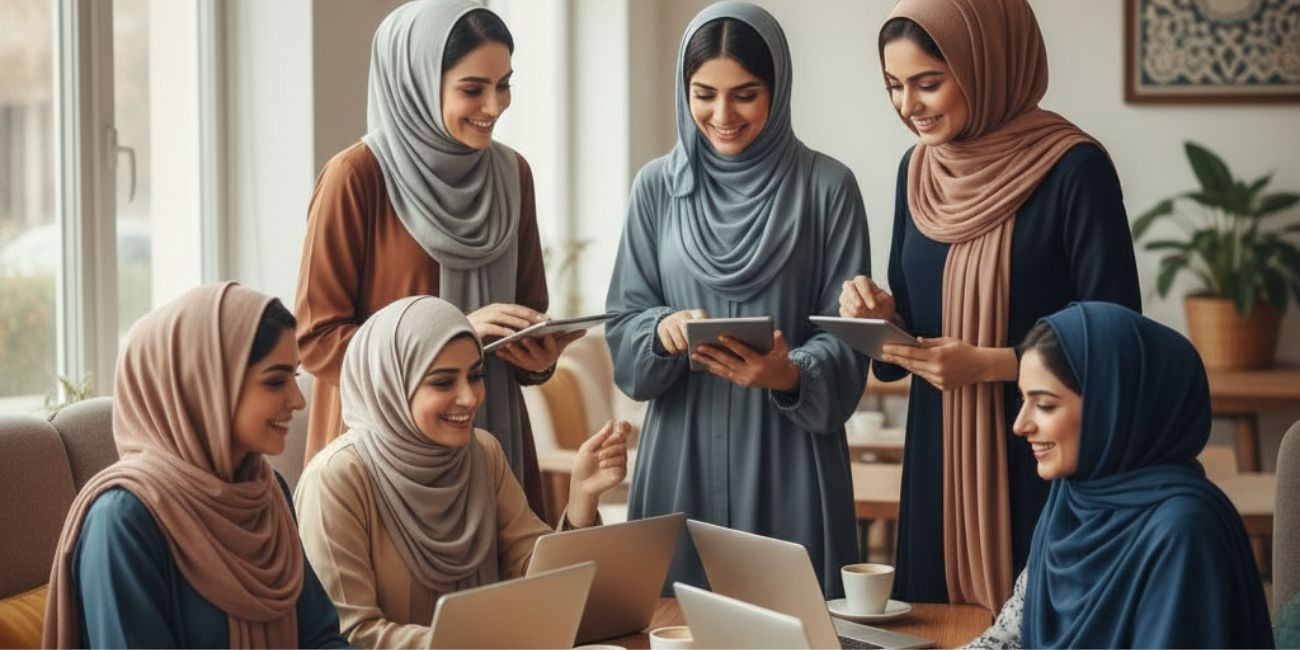
Empowering Pakistani Women to Choose Their Own Life Partner – Balancing Faith, Family, and Freedom
The Changing Landscape of Marriage in Pakistan
Marriage has long been a central pillar of Pakistani society—one deeply rooted in tradition, family honor, and religious values. However, as education, technology, and global awareness expand, Pakistani women are finding their voices and choices in new ways.
Today’s generation is witnessing a subtle but powerful shift: from passive acceptance to active participation in marriage decisions. Women are no longer mere recipients of proposals; they are partners in the process—choosing, evaluating, and praying for the right match while staying grounded in their faith.
From Tradition to Transformation
A few decades ago, arranged marriages were nearly universal, with little room for individual preference. While arranged marriages continue to hold importance, many families now recognize that compatibility, consent, and comfort are equally essential.
This evolution doesn’t reject culture—it refines it. The modern Pakistani woman seeks to blend traditional values with personal empowerment, creating harmony between her family’s honor and her individual happiness.
The Role of Education and Awareness in Women’s Choices
Education has been a transformative force. An educated woman understands her rights, her responsibilities, and her worth. Knowledge allows her to make informed, faith-based decisions—knowing that Islam honors her free will and intellect.
Women with access to education and awareness are more confident in expressing preferences, asking questions, and ensuring that their marriages align with their spiritual, emotional, and personal growth.
Women’s Right to Choose in Islam
Contrary to cultural misconceptions, Islam explicitly empowers women to choose their own life partner. This right is not modern; it is deeply rooted in the Quran and the teachings of Prophet Muhammad (ﷺ).
Quranic Perspective on Consent in Nikah
The Quran makes it clear that a valid Nikah requires mutual consent. Allah (SWT) says in Surah An-Nisa (4:19):
“O you who believe, it is not lawful for you to inherit women against their will...”
This verse firmly establishes that a woman cannot be married without her consent. The Prophet (ﷺ) reinforced this by declaring that a woman’s silence in acceptance is sufficient, emphasizing voluntary agreement.
Prophetic Examples Supporting Women’s Agency
Prophet Muhammad (ﷺ) personally annulled marriages where women were forced into
wedlock. He honored their wishes, setting a precedent for future generations.
These examples reveal that Islam uplifts women’s dignity and ensures that their
hearts and choices matter in marital decisions.
The Cultural Barriers Faced by Pakistani Women
Despite Islam’s clear guidance, some cultural traditions continue to limit women’s autonomy. These are not religious constraints but social constructs passed through generations.
Social Pressure and Misinterpretation of Modesty
In many families, modesty is confused with silence. Women are often discouraged from expressing preferences out of fear of judgment. Yet, Islam encourages modesty with confidence—a woman can be humble and still assert her right to choose.
Family Expectations vs. Individual Desires
Families often play a vital role in marriage decisions, but challenges arise when family expectations overshadow personal happiness. True harmony comes when elders guide with love, not control. Mutual respect between parents and daughters ensures that both faith and fulfillment coexist.
(Article continues with sections on The Power of Informed Decision-Making, Zaujain.pk’s Role, Common Misconceptions, Steps Toward Empowerment, FAQs, and Conclusion.)
Please type “continue writing from here” to proceed with the rest of the article.
The
Power of Informed and Faith-Based Decision-Making
Empowerment in Islam is never about
rebellion—it’s about knowledge, wisdom, and faith-guided independence.
For Pakistani women, choosing their own life partner should stem from
thoughtful reflection, consultation, and sincere prayer.
Performing
Istikhara and Seeking Parental Blessings
A spiritually grounded woman knows
that while she holds the right to choose, she also seeks Allah’s guidance
through Istikhara and her parents’ blessings for harmony. This balance
between independence and respect represents the true essence of Islamic
empowerment.
The Prophet Muhammad (ﷺ)
encouraged Muslims to make decisions after consulting others and seeking divine
guidance. When a woman performs Salat al-Istikhara, she invites Allah
(SWT) to lead her toward what is best for her faith, life, and destiny.
Equally important is involving
family members—especially parents—who bring emotional and practical wisdom to
the process. When a woman’s choice is both spiritually inspired and
family-supported, her marriage stands on a foundation of barakah
(blessing).
Building
Emotional and Practical Readiness for Marriage
Choosing one’s life partner requires
more than just emotional attachment; it demands maturity and preparedness.
Empowered women recognize the value of emotional intelligence, financial
awareness, and spiritual readiness.
Informed decision-making involves
asking the right questions:
- Do we share similar values and life goals?
- How does he practice his faith and treat others?
- Are we emotionally and intellectually compatible?
This form of introspection allows
women to make conscious, responsible, and faith-aligned choices—choices
that nurture long-term happiness.
The
Role of Family – Support, Not Suppression
In Pakistani society, family plays a
central role in marital decisions. But the goal should be guidance, not
control. A truly supportive family listens, understands, and helps their
daughter choose wisely while preserving her dignity and independence.
Encouraging
Dialogue Between Generations
Generational differences often lead
to misunderstandings. Elders may fear that “choice” equates to disobedience,
while youth may perceive “guidance” as control. The key is open
communication—creating safe spaces where daughters can share their thoughts
without fear of judgment.
When parents and daughters engage in
sincere dialogue, families become partners in empowerment. This unity
reflects the Islamic ideal of Shura (mutual consultation), ensuring
decisions are made with both wisdom and compassion.
How
Mutual Respect Builds Healthier Marriages
When a woman’s voice is heard and
respected, she enters marriage with confidence and peace. Parents who honor
their daughter’s autonomy nurture trust and gratitude, strengthening
family bonds.
A marriage chosen with both heart
and parental blessing carries divine tranquility (sakinah), fulfilling
the Quranic vision of love and mercy between spouses and families alike.
Zaujain.pk
– Supporting Women’s Empowerment in Matrimony
Modern challenges call for modern
solutions. Zaujain.pk is not just a matrimonial platform—it’s a faith-centered
bridge between tradition and empowerment. It enables Pakistani women to
exercise their right to choose while remaining within the boundaries of Islamic
ethics and cultural respect.
Verified
Profiles and Safe Environments for Women
Zaujain.pk prioritizes women’s
safety, privacy, and comfort. Every profile is verified, ensuring
transparency and security. The platform fosters an atmosphere of dignity, where
women can explore potential matches without judgment or harassment.
It’s designed for those who seek
marriage for the right reasons: faith, compatibility, and companionship—not
superficial attraction or casual interest.
Promoting
Equality and Faith-Based Connections
What makes Zaujain.pk unique is its
commitment to Islamic equality and respect. It encourages both men and
women to approach marriage as a partnership of values, intellect, and faith.
Here, empowerment isn’t about
rejecting cultural roots—it’s about reviving Islamic rights and values
that have always supported women’s agency.
Through this, Zaujain.pk becomes
more than a website—it’s a movement that celebrates the dignity, freedom,
and faith of Muslim women.
Common
Misconceptions About Women’s Choice in Islam
Many people confuse cultural
traditions with religious teachings. Understanding the distinction is essential
for true empowerment.
The
Myth That “Parents Alone Decide”
Islam values parents immensely, but
it never removes a woman’s right to choose her spouse. The Prophet (ﷺ) annulled
marriages that were conducted without the woman’s consent, proving that
compulsion contradicts Islamic law.
Respecting parents doesn’t mean
surrendering personal agency—it means finding a middle ground between obedience
and self-determination.
The
Balance of Love, Respect, and Autonomy
Empowerment in Islam is not
rebellion; it’s harmony. A woman can love her family deeply, respect cultural
traditions, and still make independent choices. When guided by Iman (faith),
her decisions reflect both strength and humility.
In Islam, independence and respect
are not opposites—they are two sides of the same coin.
Steps
Toward a More Empowered Future for Pakistani Women
For empowerment to flourish within
faith and culture, collective action is needed—from individuals, families, and
institutions alike.
Promoting
Education, Dialogue, and Digital Literacy
Education remains the cornerstone of
empowerment. When women are educated, they develop the confidence to express
opinions, challenge injustice, and make decisions grounded in wisdom.
Digital literacy also plays a key
role. Platforms like Zaujain.pk allow women to explore marriage opportunities
safely, helping them find compatible, faith-aligned partners in an
ethical environment.
Encouraging
Platforms That Align with Islamic Morality
Empowerment must not compromise
modesty or morality. Islamic matrimonial services that protect women’s privacy,
respect their rights, and encourage faith-based compatibility are vital.
Zaujain.pk exemplifies this
model—modern in technology, traditional in values, and Islamic in spirit.
It allows women to navigate life choices with both empowerment and dignity.
FAQs
About Women’s Right to Choose Their Spouse
1. Does Islam allow a woman to
choose her own husband?
Yes. Islam grants women full authority to accept or reject a marriage proposal.
Consent is a core condition for Nikah.
2. Can a woman discuss her
preferences with her family?
Absolutely. Open and respectful dialogue ensures her happiness and strengthens
family unity.
3. How can a woman balance
independence and respect for her parents?
By making decisions through consultation, kindness, and honesty—seeking both
Allah’s approval and her family’s blessings.
4. What if parents reject her choice
without valid reason?
If a suitor is of good faith and character, Islam allows her to make a personal
choice, even if family resistance arises. However, it’s encouraged to resolve
differences peacefully.
5. Can online platforms like
Zaujain.pk help women find suitable partners?
Yes. When used responsibly, faith-based matrimonial platforms provide safe,
ethical, and Shariah-compliant ways to find compatible matches.
6. What role does Istikhara play in
this process?
Istikhara is essential—it invites Allah’s guidance into the heart, ensuring
that decisions are spiritually aligned and blessed.
Conclusion
– Empowerment Through Faith, Family, and Freedom
True empowerment for Pakistani women
lies in the balance of faith, freedom, and family values. Islam grants
every woman the right to choose her spouse, to be heard, and to live with
dignity. Society’s role is not to silence her—but to support her, guide her,
and trust her wisdom.
When faith, respect, and education
come together, Pakistani women can confidently choose their life partners,
building marriages rooted in love, understanding, and divine guidance.
Through platforms like Zaujain.pk,
this vision becomes reality—where women choose not in defiance, but in
devotion; not through rebellion, but through faith and freedom united in
purpose.